← Back to Resources
From Generation to Governance: Why We're Building Infrastructure for Trusted Advertising
This year global advertising revenue reached its highest share of GDP ever.
AI is cited as a key driver of that growth, transforming how ads are both placed, analyzed, and created.
But as the advertising industry grows faster than predicted, the systems used to govern it can’t keep up.
Production is a recurring challenge in advertising: How do we make and ship more content, faster, across audiences, formats, and channels?
AI is quickly solving that problem, but it’s also exposing a new one: How can organizations effectively govern this content?
More Than Just Creative
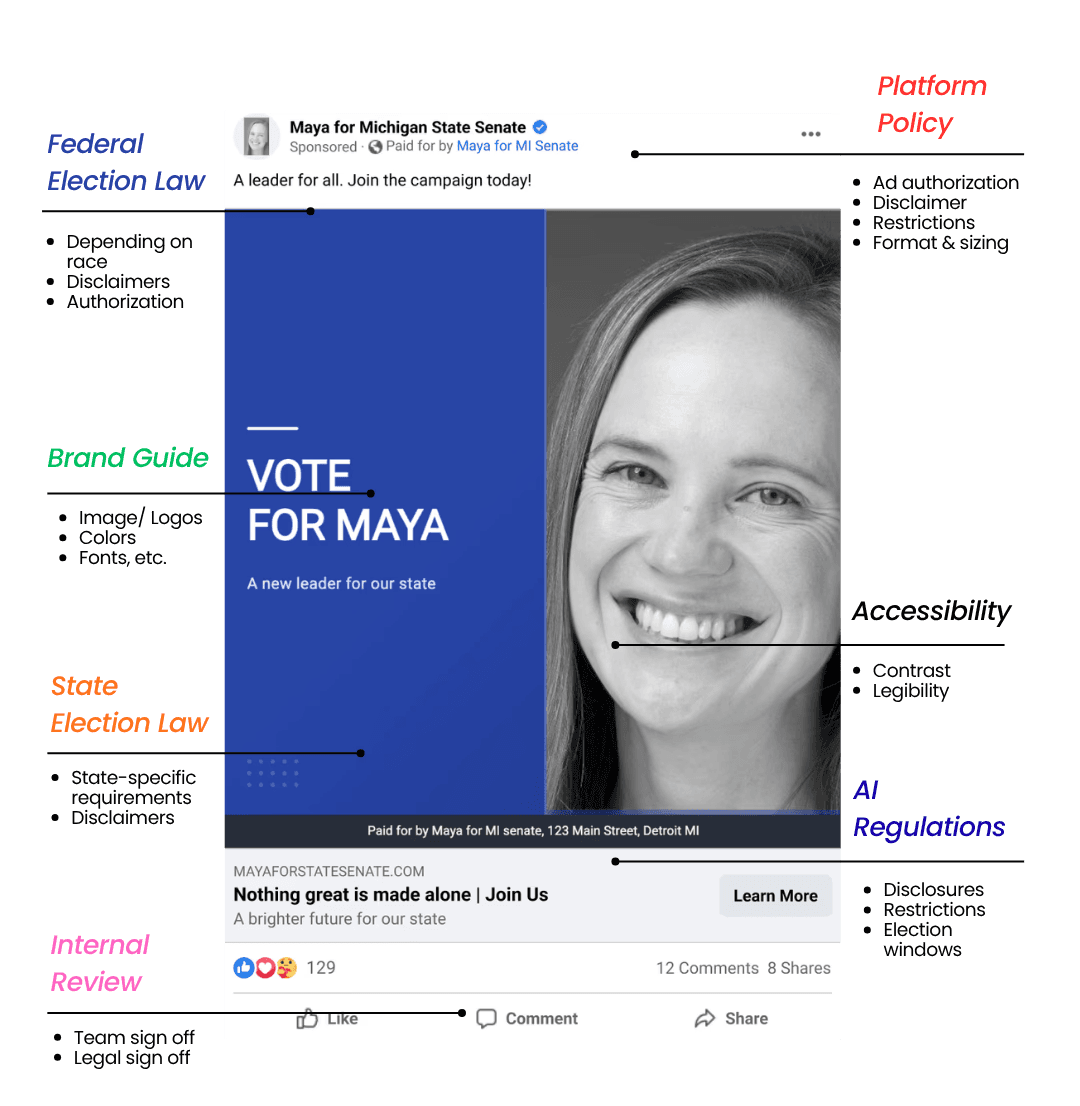
An ad isn't just a creative asset. It’s the result of a lot of rules.
But there’s no single rulebook.
Before an ad ever reaches an audience, it may need to comply with federal and state regulations, include required disclaimers, follow brand guidelines, satisfy platform policies, and pass legal and compliance review.
Each of these reviews adds another layer of governance to the process.
While AI made content creation easier, it made content governance significantly harder.
When teams produced a handful of assets, manual review could barely keep pace.
Now that AI can generate hundreds of variations in minutes, the old review process creates a painful bottleneck.
As creation becomes dynamic and automated, governance has remained largely static and manual.
That is the gap we need to close.
Governance Is Not Keeping Pace
Today, the rules and requirements that govern advertising are scattered across PDFs, websites, spreadsheets, policy documents, brand guidelines, and institutional knowledge.
Advertisers and designers are expected to read, interpret, remember, and apply these standards correctly every time assets are created.
At the same time, the underlying rules keep changing.
States are passing new AI laws or updated existing laws. Platforms are changing their policies, and organizations are developing their own AI standards.

Tracking these changes is necessary.
However, tracking is not governance.
A regulation sitting in a database doesn't change an output.
A policy in a PDF doesn't prevent a mistake.
A checklist doesn't guarantee that a requirement is applied consistently.
Rules become useful when they can be translated into systems that actually guide what gets created.
That is the shift that is needed. We must operationalize governance.
Why It Matters
Now content is reviewed after the work has already been created.
What if instead of applying rules at the end, we guided creation from the beginning?
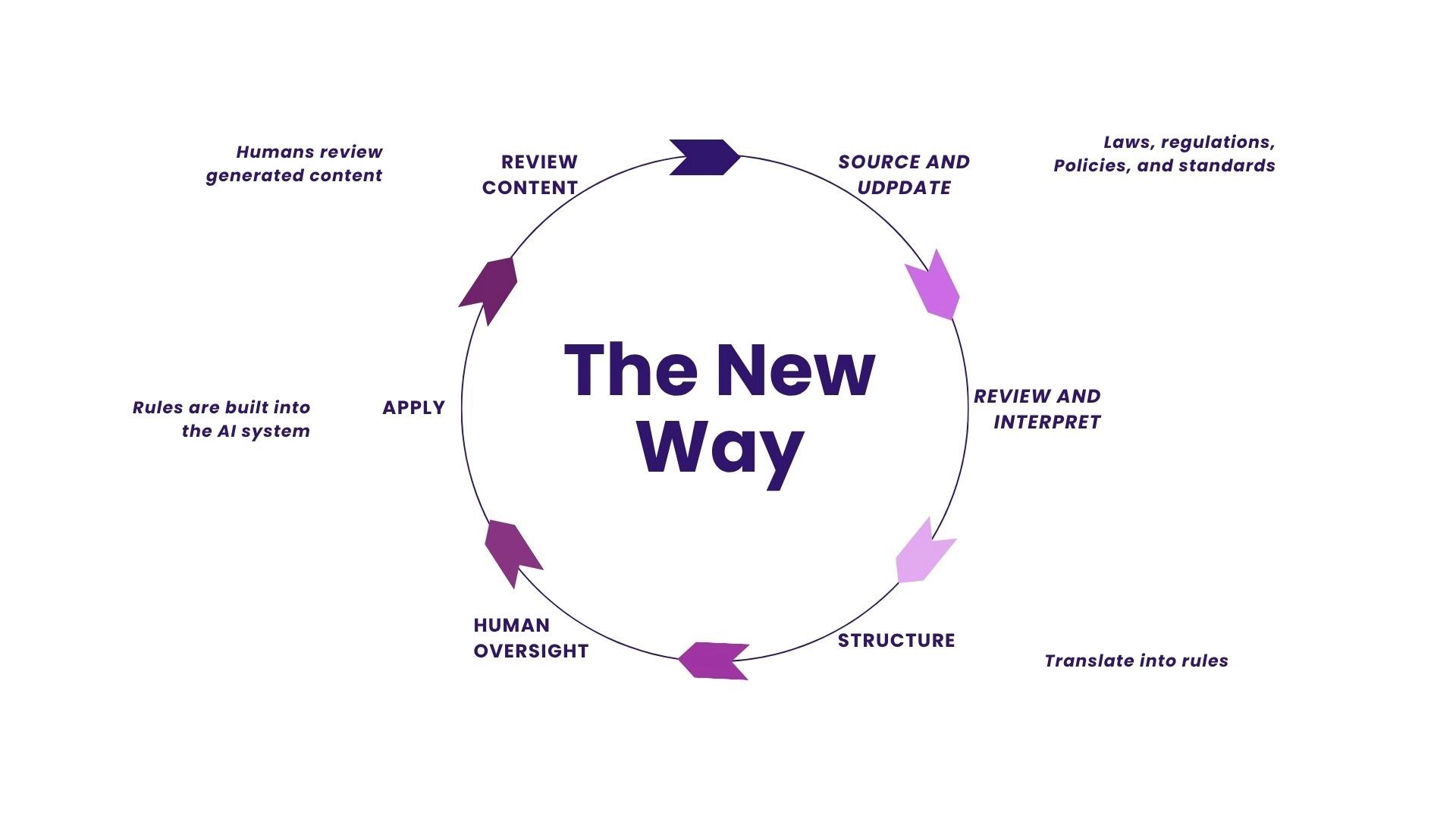
This does not mean removing human oversight from the process.
It means giving us better infrastructure.
Lawyers, compliance professionals, policy experts, and brand teams provide judgment that technology cannot replace.
Their expertise should be focused on the nuanced decisions that require human judgment, not repeatedly catching the same preventable issues.
The Governance Gap
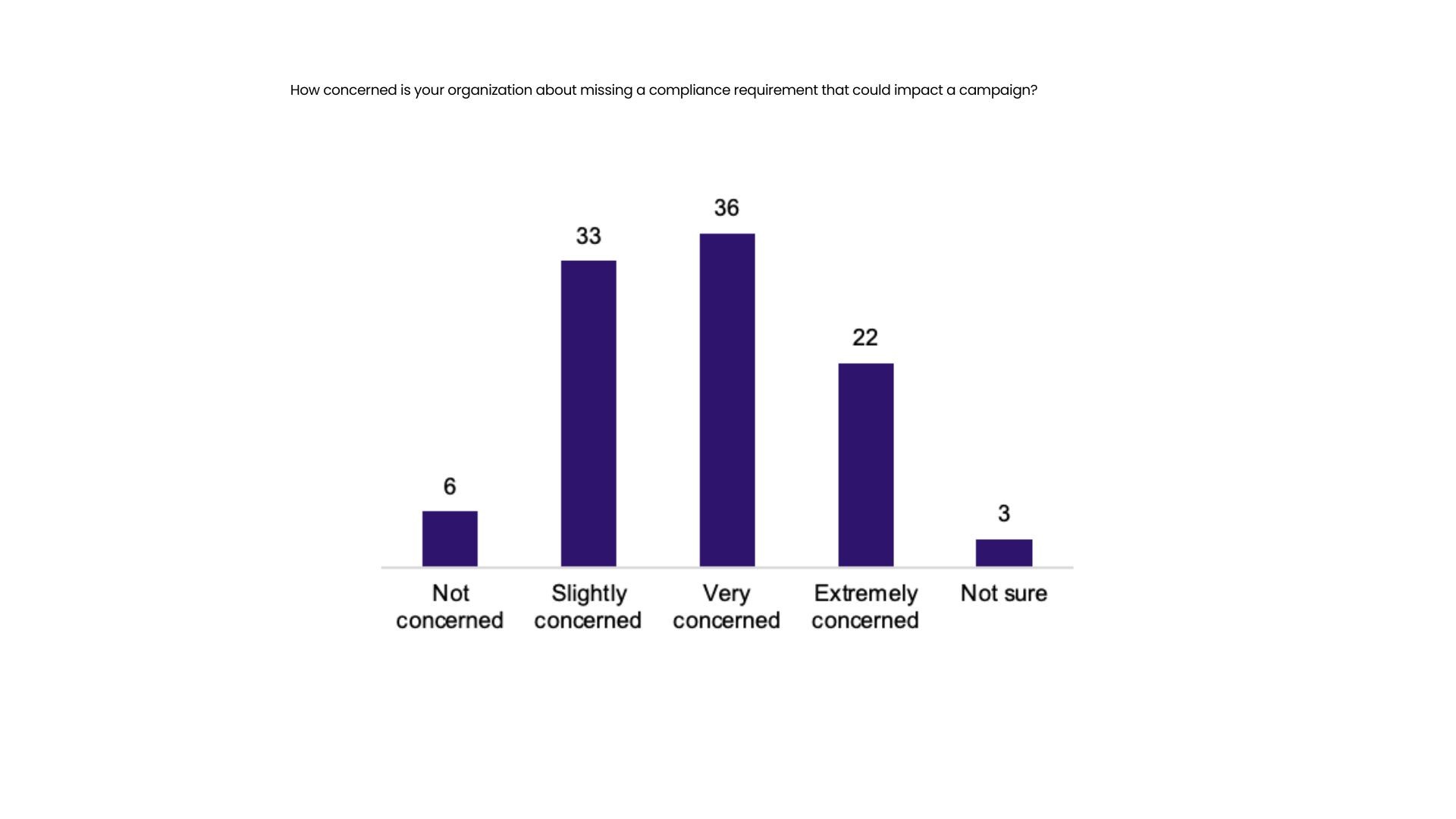
To better understand this challenge, we surveyed a group of marketers and advertisers in regulated sectors about AI, oversight, and governance.
The results confirmed the gap we saw:
Four out of five marketers are already using or exploring AI for advertising
Only one in ten organizations has any formal AI governance policies
84% of respondents report uncertainty around advertising compliance
48% percent say they are very or extremely concerned about compliance risk
Demand for a solution is seen across departments with 78% of designers, 71% of marketers and 67% of executive leadership all looking for a solution
Governance by Design
BattlegroundAI originally started with a practical question:
How do we help organizations create more advertising content while still meeting the rules and standards that govern it?
As we built, something became increasingly clear: generating the content wasn't the biggest problem.
Consistently applying the rules was.
That changed how we think about what we're building.
The next generation of AI infrastructure can't only be about what models can create. It also has to determine the conditions under which they create.
Rules, policies, regulations, and organizational standards need to become part of the system, not something checked only after the system produces an output.
Where We Go From Here: Introducing Workspaces
That’s why we’re introducing Workspaces, now available in early beta.
We’re building a connected layer where laws, regulations, policies, organizational standards, and human expertise translate into operational rules that guide creation from the start.
We took thousands of words from laws and regulations and operationalized them, turning them into actionable rules. Experts reviewed them, and then we built those rules into the creation process.
We’re starting with federal and state requirements for political advertisers, beginning in Michigan and Connecticut. From there we will quickly expand across jurisdictions, platforms, policies and industries.
The time to build the infrastructure to govern AI is now.